7 min read
A Seasonal HVAC Maintenance Checklist for Tri State Homeowners
Heating and cooling systems almost never fail without warning. They fail after months of small signals that nobody was watching for. The furnace that quits during the first hard freeze in January has usually been telling you something since October.
The tri state climate is hard on equipment. Systems here run air conditioning through humid stretches from June into September, then switch to heating for a long cold season, often with a few whiplash weeks in between where they do both in the same week. That is a lot of cycles.
Two professional visits a year, one before cooling season and one before heating season, plus a handful of habits in between, prevents most of the failures we get called out for.
Spring, before cooling season
Do this in April or early May, before the first genuinely hot stretch.
What you can handle
Clear a two foot perimeter around the outdoor condenser unit. Cut back shrubs, pull weeds, and remove leaves and grass clippings that collected over winter. That unit needs airflow on all sides to shed heat.
Rinse the condenser coil from the outside in with a garden hose on a normal setting. Not a pressure washer. The fins bend easily and bent fins choke airflow.
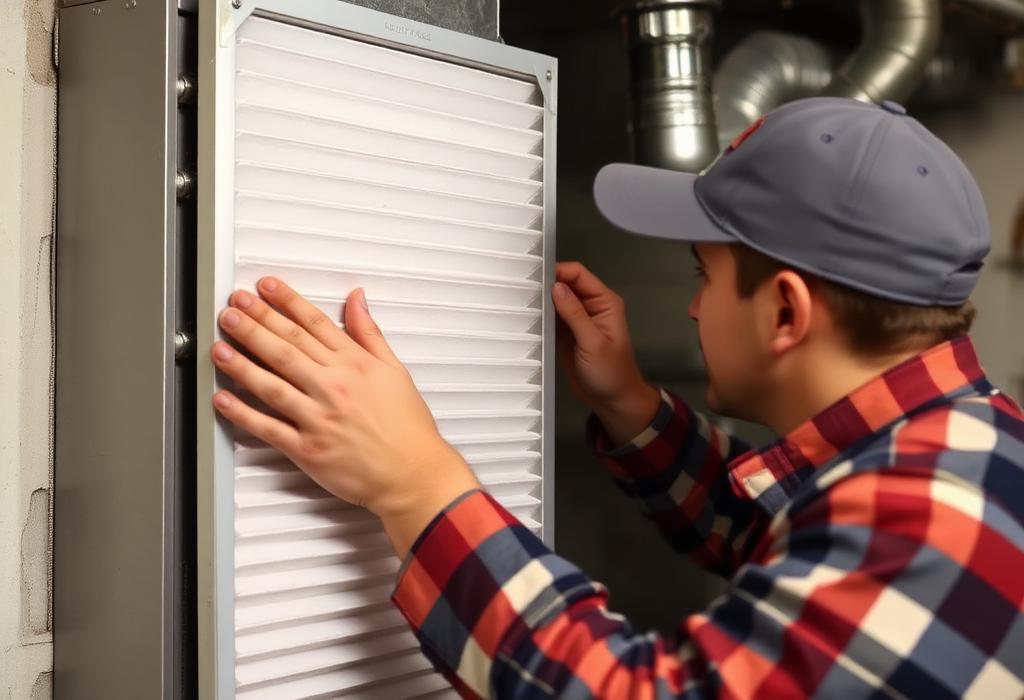
Change the filter. If you have a humidifier, close its damper for the season and change the pad.
Pour a cup of distilled vinegar down the condensate drain line to clear algae before it clogs. A blocked drain line is one of the most common summer service calls, and it can back up and cause water damage.
Turn the system on and let it run for fifteen minutes. Listen for grinding, squealing or rattling. Check that the air coming from the vents is genuinely cold, not just moving.
What needs a technician
Refrigerant level checks. Low refrigerant means a leak somewhere, and adding more without finding the leak just delays the same problem at a higher cost.
Electrical inspection. Capacitors, contactors and wiring connections degrade and are the cause of a large share of midsummer failures. A capacitor is inexpensive to replace on a scheduled visit and expensive to replace as an emergency call in August.
Blower and evaporator coil cleaning. The indoor coil collects grime that reduces efficiency in a way you will not notice until the bill arrives.
Thermostat calibration and a full cycle test.
Summer, while it is running hard
Change the filter on schedule, which usually means monthly during heavy use.
Keep the condenser clear. Grass clippings from every mow end up in it if the discharge points that direction.
Watch for a spike in the electric bill that does not match the weather. That is often the first sign of a system working harder than it should.
Do not set the thermostat lower than you actually want it, thinking it cools faster. It does not. It just runs longer.
If the unit freezes up, which shows as ice on the refrigerant line or coil, turn it off and let it thaw completely before running it again. Then find out why. It is usually a dirty filter, a blocked return or low refrigerant, and running it frozen risks the compressor.
Fall, before heating season
Do this in September or October. This is the more important of the two visits, because heating failures are the ones that get dangerous.
What you can handle
Change the filter.
Clear anything stored around the furnace. Cardboard boxes, paint cans and cleaning supplies near a heat source are a fire risk, and they block the access a technician needs.
Test every smoke detector and carbon monoxide detector in the house, and replace the batteries. If you do not have a carbon monoxide detector on every level, add them. This matters more than anything else on this list.
Run the heat for twenty minutes before you actually need it. There is usually a burning smell from dust on the heat exchanger, which is normal and clears. What is not normal is a smell that persists, or a smell like gas.
Check that all supply vents are open and unblocked by furniture or rugs. Closing vents in unused rooms does not save money on most systems. It raises static pressure and stresses the blower.
What needs a technician
Heat exchanger inspection. A cracked heat exchanger can leak carbon monoxide into the living space. This is the single most important reason to have a professional look at a furnace annually, and it is not something you can check yourself.
Burner cleaning and combustion analysis. Dirty burners run inefficiently and can produce carbon monoxide.
Flue and venting inspection, confirming exhaust is actually leaving the building.
Gas pressure and safety control testing.
Blower motor and belt inspection.
Winter, while it is running hard
Change the filter monthly during heavy use.
Keep exterior vents and the furnace exhaust clear of snow and ice. A blocked exhaust is a carbon monoxide hazard.
Set the thermostat and leave it alone. Large swings cost more than a steady setting.
If you are leaving town, do not turn the heat off. Set it no lower than 55 degrees so pipes do not freeze.
Listen for short cycling, which is the system turning on and off in rapid bursts. That is a symptom of something wrong, not a quirk.
What this actually buys you
A maintained system uses less energy, lasts closer to its full expected life, and is far less likely to fail at the worst possible moment. It also keeps most manufacturer warranties valid, since many require documented annual service.
The other thing it buys is warning. A technician who sees your system twice a year notices the capacitor reading drifting or the heat exchanger developing stress before either one strands you.
K&M Solutions provides HVAC maintenance, furnace cleaning and air duct cleaning throughout Evansville and the tri state area. We are licensed and insured, and estimates are free. If your system has not been looked at in over a year, fall is the time to fix that.